What Solar Incentives Are Still Available in 2026?
- The 30% federal residential Investment Tax Credit (ITC) expired on December 31, 2025, but six other significant solar incentives remain largely intact for 2026 homeowners.
- Net metering is a crucial state-level policy, crediting homeowners for excess solar electricity often at full retail rates; its value varies by state, with states like Massachusetts and New York maintain full retail credits.
- Seventeen states offer their own solar tax credits, such as Massachusetts 15% state income tax credit, up to $1,000, reducing upfront costs.
The 30% federal solar tax credit is gone. That is the news everyone heard.
Here is what most people missed: the federal credit was one incentive. The incentive landscape has six others, and most of them are still intact.
By the end of this, you will know exactly what is available in 2026, how each incentive works, and which ones apply to your situation.
What Changed (and What Didn't)
The federal residential Investment Tax Credit (Section 25D) expired on December 31, 2025, under the One Big Beautiful Bill signed July 4, 2025. Homeowners who own their system, financed with cash or a loan, no longer receive the 30% federal tax credit.
That is the change.
Everything else below is still on the table.
Net Metering
Net metering is the most valuable incentive most homeowners have never heard of.
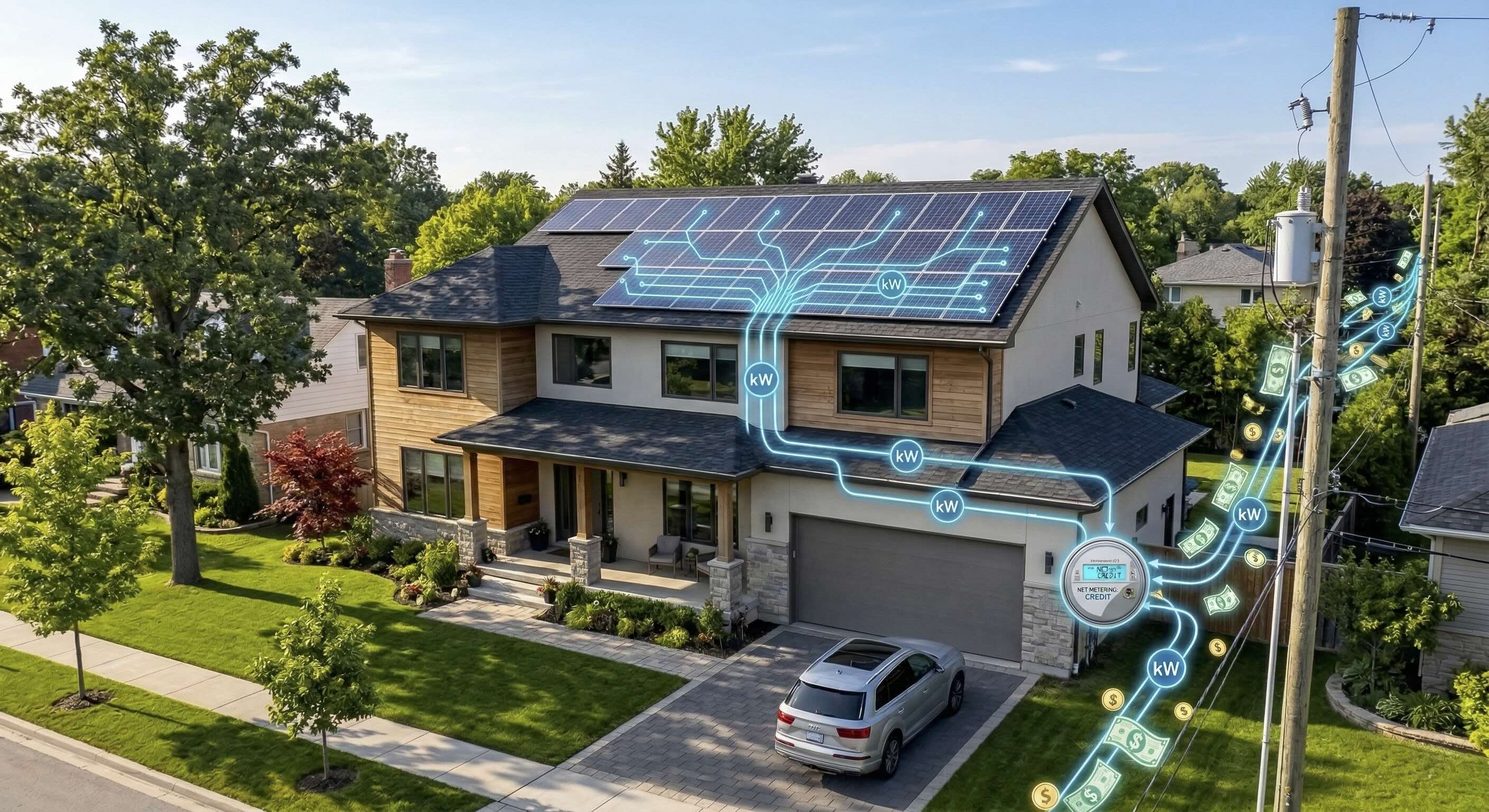
Here is how it works: when your solar panels produce more electricity than your home uses, the excess goes to the grid. Your utility credits you for that electricity, which offsets what you draw from the grid at night or on cloudy days. In most states, those credits are valued at the full retail rate of electricity.
For a well‑sized system, net metering can reduce your annual electricity bill to near zero.
The important detail: net metering policy varies significantly by state. States like New York, New Jersey, and Massachusetts still offer full retail net metering, which is among the strongest incentive available. However, these incentives may not last forever. For example, California recently moved to a reduced export rate under NEM 3.0, which changed the economics for solar‑only systems.
If you want to take advantage of this incentive while it exists, now is a good time to explore solar for your home or business.
State Tax Credits
Seventeen states offer their own solar tax credit, separate from the federal program. The federal expiry did not touch these.
The strongest programs:
New York: A 25% state income tax credit on your system cost, up to $5,000. A homeowner with a $25,000 system qualifies for the full $5,000 credit on their New York state tax return. This is a dollar‑for‑dollar reduction in state taxes owed. Unused credit can be carried forward for up to five years. Note: New York Senate Bill S2626, introduced in 2025, proposes raising the maximum credit to $10,000 with refundability for LMI households. As of early 2026, the bill has not been signed into law — check DSIRE for any enacted updates before filing.
Massachusetts: A 15% state income tax credit, up to $1,000. Smaller than New York's, but it stacks with other Massachusetts programs. The SMART program also provides a performance‑based incentive for grid‑connected solar, with a 2026 base rate of approximately $0.03/kWh for most residential systems — higher for systems paired with battery storage or installed by low- to moderate‑income households. SMART rates decline as blocks fill, so earlier installers lock in better rates.
Maryland: A $1,000 flat rebate through the Residential Clean Energy Rebate Program for systems over 1 kW. Simple, income‑agnostic, administered through the Maryland Energy Administration.
South Carolina: A 25% state tax credit, paid out at up to $3,500 per year (or 50% of your state tax liability, whichever is less), with a 10‑year carryforward. The lifetime maximum credit is $35,000. A $25,000 system generates a $6,250 total credit, distributed over 2 to 3 years for most filers — one of the most generous state programs in the country.
Montana: A dollar‑for‑dollar credit on your installation cost, capped at $500 for individual filers ($1,000 for married filing jointly), with a 4‑year carryforward. A modest amount on a full system, but stacks with Montana's full retail net metering and 10‑year property tax exemption.
If you live in a state without a solar tax credit, net metering and property tax exemptions are often still available. DSIRE (Database of State Incentives for Renewables and Efficiency) maintains a complete, up‑to‑date list by state.
Property and Sales Tax Exemptions
These are the quietest incentives in solar and among the most under‑appreciated.
Property tax exemptions: Solar installations increase home value. In most states with property tax exemptions, that added value is excluded from your property tax assessment. You get the higher home value without the higher tax bill. States with active exemptions include Massachusetts, New York, New Jersey, Texas, Florida, Colorado, Arizona, and more than 30 others.
Sales tax exemptions: Several states exempt solar equipment from state sales tax at the point of purchase. New Jersey exempts solar equipment entirely. Florida has a permanent sales tax exemption for solar. Massachusetts and Arizona also have exemptions in place.
On a $25,000 system, a 6% sales tax exemption saves $1,500 before any other incentive is applied. These are not headline numbers, but they are real savings that require no action on your part.
SRECs: Solar Renewable Energy Credits
If you live in an SREC market, your solar system generates a separate income stream in addition to your energy savings.
Here is how SRECs work: for every 1,000 kWh your system produces, it earns one SREC. You can sell that SREC to utilities, which are required by state law to source a percentage of their power from renewable sources. The utilities pay for your SRECs to meet that requirement.
Active SREC markets for new residential installations in 2026: New Jersey, Maryland, Washington DC, Pennsylvania, Delaware, and Illinois. Note: Massachusetts closed its SREC program to new installations in 2018 and replaced it with the SMART program (covered above). Ohio has a technically active SREC market, but rates have fallen to approximately $3.50 to $4 per MWh — too low to be a meaningful factor in your solar economics.
SREC values vary significantly by state. New Jersey is the strongest market by far. New Jersey's SREC‑II (ADI) program currently pays $85.90 per MWh for Energy Year 2025‑26, with a scheduled increase to $95.23/MWh for Energy Year 2026‑27 starting June 2026. Both rates are guaranteed for 15 years from system interconnection — a contracted income stream, not a fluctuating market price.
A typical 8 kW residential system in New Jersey producing 9,600 kWh per year earns approximately $825 annually at the current rate, rising to roughly $914 per year from June 2026. Over 15 years, that is a significant offset to system cost independent of any tax credit.
Pennsylvania trades at approximately $31 per SREC. Maryland and DC values fluctuate with supply and demand. Illinois operates through the Adjustable Block Program (Illinois Shines), which pays a fixed rate per kWh over 15 years — structured more like SMART than a traditional open SREC market.
If your state has an active SREC market, it is one of the stronger reasons to install sooner. More systems in the market over time compresses SREC prices.
Leases and PPAs: The 30% Credit Is Still Available
This is the option most people overlook.
When you sign a solar lease or power purchase agreement (PPA), a third‑party company owns the system installed on your roof. You pay a fixed monthly rate (lease) or a per‑kWh rate (PPA) to use the electricity it generates.
Because the company owns the system, it can still claim the federal Clean Electricity Investment Credit (Section 48E), which remains active for lease and PPA operators through 2027. The company passes that value to you through lower rates. Some providers are also eligible for the Domestic Content Bonus Credit, which adds further savings passed to homeowners.
Prepaid lease and PPA options apply the savings upfront as a 17% to 30% discount on the total cost at signing.
Keep in mind that leases and PPAs leave you with lower monthly bills and but no ownership stake although most offer buy out options after 5 years and at maturity.
Battery Storage Incentives
The federal battery credit expired alongside the residential solar credit. But several states still offer incentives for battery storage.
Massachusetts: For residential customers, Mass Save incentivizes batteries enrolled in ConnectedSolutions program with $275 per kW for the battery’s average contribution during summer events. Mass According to Mass Save, a typical 5 kW battery can earn about $1,375 per year, depending on system size and settings. Additionally, Massachusetts residents can use the Mass Save HEAT Loan for battery storage, with 0% financing up to $25,000for eligible battery projects.
California: The Self‑Generation Incentive Program (SGIP) provides rebates for battery storage systems, but the general market budget is currently exhausted and on a waitlist as of early 2026. New applicants can still join the waitlist. Equity and Equity Resiliency tiers — available to lower‑income households and customers in high fire‑threat or medically vulnerable situations — have more available funding, with rebates up to $850/kWh (Equity) and $1,000/kWh (Equity Resiliency). Standard market rebates, when available, range from $150 to $500/kWh. If you qualify for an equity tier, apply early — these funds move faster than the general market.
Maryland: The Energy Storage Income Tax Credit was discontinued at the end of 2024. For FY2026, Maryland replaced it with the Residential and Commercial Energy Storage (RCES) Grant Program, a direct grant program funded with $2 million from the Strategic Energy Investment Fund. Applications are accepted through June 5, 2026 or until funds are exhausted. Unlike the tax credit it replaced, the RCES grant does not require tax liability to benefit from it — accessible to retirees and lower‑income households who would not have been able to use a credit.
New York: The NY‑Sun program includes additional incentives for battery storage paired with solar in certain programs.
Battery storage changes the economics of solar in states with Time‑of‑Use rates or limited net metering. Worth evaluating alongside your solar proposal, not as a separate decision.
How to Know What Is Available for Your Home
Incentives depend on your state, your utility, your income, and sometimes your roof's orientation and size. There is no single national number.
The fastest way to see your actual numbers: get a fully engineered proposal that models your specific system, your local electricity rate, and available incentives in your zip code. Terawatt designs your system from your address and shows you real pricing from verified local installers. Your proposal includes savings projections, financing options, and applicable incentives.
No sales call required. Your contact info stays private until you're ready.
The Bottom Line on 2026 Incentives
The federal 30% credit for homeowners who own their system is gone. Six other incentives are not.
Net metering. State tax credits. Property and sales tax exemptions. SRECs. Lease and PPA credits. Battery storage rebates.
Which of these apply to you depends on where you live. In high‑incentive states (New York, New Jersey, Massachusetts, Maryland, Illinois), the combined value of remaining incentives can offset a significant portion of the federal credit's value. In lower‑incentive states, rising electricity rates and hardware cost declines carry more of the weight.
The federal credit made the decision easier to time. The case for solar in 2026 does not require it.
Sources
- Enphase: "The Federal Solar Tax Credit is changing: What homeowners need to know before 2026" (2025)
- Solar.com: "Solar Incentives by State in 2026"
- EcoWatch: "2026 Solar Incentives and Rebates (Top 9 Ranked States)"
- EnergySage: "New Jersey Solar Incentives, Tax Credits & Rebates 2026"
- NuWatt Energy: "NJ SuSI/ADI Program 2026: SREC‑II Rates, How to Register & 15‑Year Income"
- Solar Energy Estimator: "NJ SREC‑II Pricing Review March 2026" (SREC‑II rate $85.90 EY25‑26, $95.23 EY26‑27)
- Maryland Energy Administration: "Residential and Commercial Energy Storage Grant Program" (energy.maryland.gov)
- EnergySage: "Guide to New York Solar Incentives & Tax Credits in 2026"
- NY Senate Bill S2626 (pending legislation re: NY credit cap increase — monitor for enactment)
- DSIRE: Database of State Incentives for Renewables and Efficiency (programs.dsireusa.org)
- Bodhi Solar: "Top residential solar questions about the One Big Beautiful Bill — Answered" (2026)
- Electrek: "The 30% home solar tax credit is dead — long live the 30% home solar tax credit" (January 2026)
- Finray Solar: "Are There Solar Incentives Left in 2026?"
- CPUC: "Self‑Generation Incentive Program (SGIP)" — budget and waitlist status (cpuc.ca.gov)
- Illinois Shines: "Welcome to Illinois Shines Program Year 2025‑26" (illinoisshines.com)
- Straight Up Solar: "Illinois SREC Incentives Increase in 2026"
- SRECTrade: "SREC Markets — Solar Renewable Energy Certificates" (srectrade.com)
- Green Power Energy: "2026 Guide to SRECs in Pennsylvania"
- EnergySage: "South Carolina Solar Incentives, Tax Credits & Rebates 2026"
- Montana Department of Revenue: "Alternative Energy System Credit (Form ENRG‑B)"
- EnergySage: "Massachusetts Solar Incentives — SREC II closed 2018, SMART program current"
- Mass.gov: "SMART 3.0 Program Details"